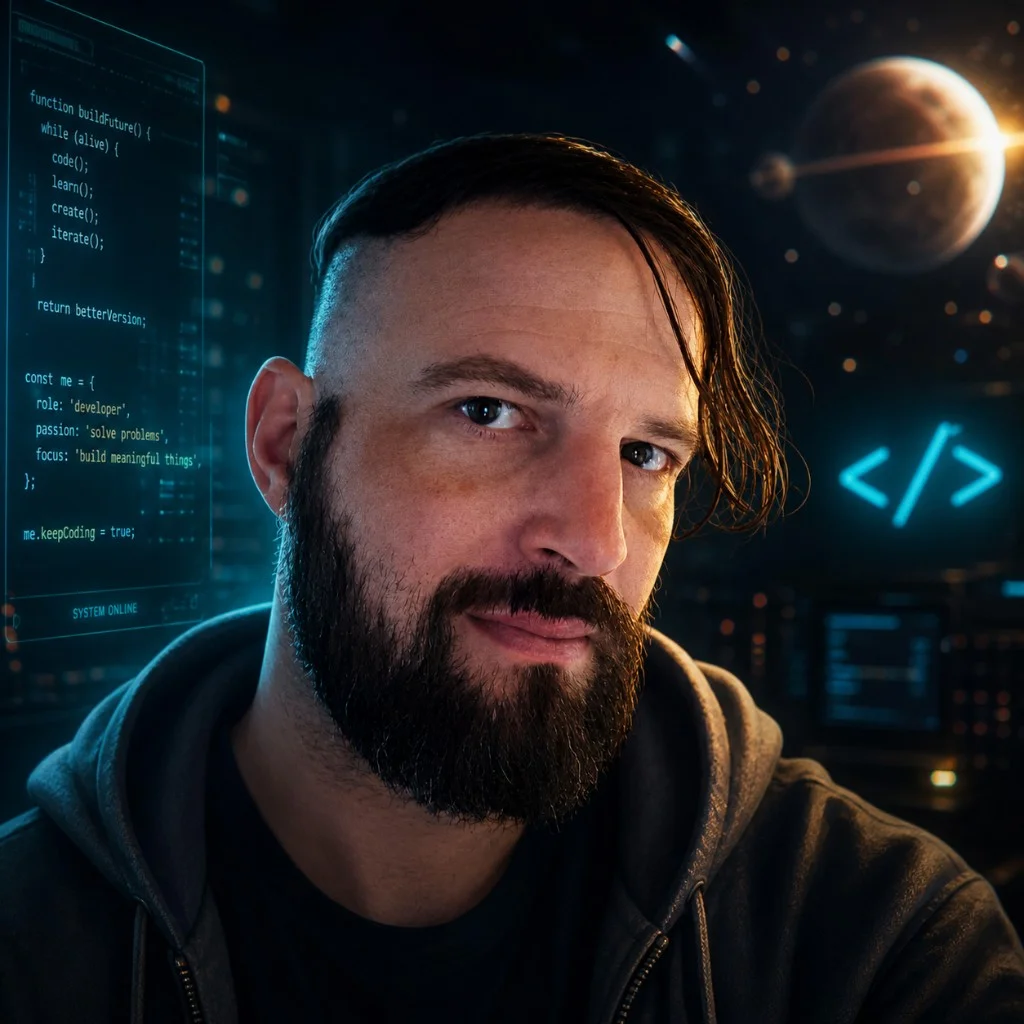
Short version: I'm at one year clean again. I didn't get here through a 12-step program or a big life overhaul. I got here through hundreds of 30-second moments of catching my survival brain before it took the wheel. RecoveryOS is how I tracked them, and it's about to go live.
Something I have battled with for a long time, as I am sure many of you have, is the idea that recovery is mostly a mindset problem. Change how you think, hand your will over, and the rest follows. It never quite worked for me, and for years I took that to mean something was wrong with me.
What actually changed
What changed was learning that a lot of what I was fighting was physiology, not character. When a craving hits, the part of the brain built to keep you alive treats it like an emergency. Breathing gets shallow, focus narrows to one thing, and the body floods with the chemistry that says act now. In that state, reasoning with yourself barely gets a word in. The alarm at the centre of all this is the amygdala, and once it is firing, willpower is a bit like bringing a pamphlet to a house fire.
The part that took me far too long to hear is that the alarm can be retrained. Not by thinking harder, but by catching it in the act, over and over, and giving my body a different response each time. Every time I did that, the loop got a little weaker. Enough repetitions, and my baseline started to shift.
The tools that did the heavy lifting
None of this was dramatic. These are the things I actually used, and most of them take under a minute:
- The physiological sigh. Two inhales through the nose, the second one topping up the first, then a long, slow exhale through the mouth. One or two of those and I can feel my shoulders drop.
- The horizon scan. Lifting my eyes and taking in the widest view I can, letting my gaze go soft and wide instead of locked onto one thing. The way it was explained to me, that wide view tells the nervous system there is no threat right in front of me, and in my experience it does exactly that.
- Urge surfing. Instead of fighting a craving or obeying it, I watch it. It rises, it peaks, and if I don't feed it, it falls. Every craving I have ever surfed has ended.
- Catching anhedonia early. This one surprised me. For me, a flat, grey, nothing-feels-good stretch is often the first warning that the alarm is about to start going off. Noticing it early gives me time to act while it is still small.
I haven't done hours of deep meditation. I haven't moved to a mountain. It has been a 30-second breathing exercise, done again, and again, and again.
The small rewards came back
Here is the part I didn't expect. In active addiction, making my bed or brushing my teeth was not enough of a reward to even bother. Ordinary things barely registered. Now I get a small, real lift from them. That sounds tiny written down. It is not tiny. To me it is the clearest sign that my body chemistry is slowly normalising, and it is the most hopeful thing I have.
It's still hard
I'm not going to pretend everything is sorted. Finding work right now is hard, and I'm still digging out from the debt I built up while I was using. Some days the gap between where I am and where I want to be feels very wide. But I'm facing those days with a nervous system that isn't stuck in a constant state of emergency, and that changes everything about how they go.
How RecoveryOS got built
I built RecoveryOS because I needed it and it didn't exist. I wrote most of it on an Anbernic RG406V, a little Android gaming handheld, using Termux, a plain text editor and Capacitor, with very limited access to the internet and a lot of patience. Every feature in it is something I was using on myself: the daily check-in, the emergency tools, the craving log, and a clean-day counter that doesn't reset to zero when you slip.
That last one matters to me more than anything else in the app. If you lapse, you do not start from the bottom. You carry on from where you were. The days you put in are still in your body, and they still count.
RecoveryOS is built to sit alongside counselling and community, not to replace them. It is the practice in between.
Why I give away what I can
When I solve a problem in my own life, I try to share the solution so it might help someone else. Some of that is RecoveryOS, and some of it is code I put up on GitHub. I still need to make a living, but whatever I can give away, I do. Building things that solve real problems has become one of the things that brings me genuine joy.
The person who showed me it was possible
My mom, Camilla McDowell, is almost a decade into her own recovery. Watching what she has done with her life has inspired me more than I can put into words. I'm trying to do for others what she did for me: show them it's possible, and that it's ok if the road isn't straight.
If you're in it right now, I hear you. You can do this, one small thing at a time. And if you slip, you haven't lost everything. You carry on from where you were.
Love to all of those still struggling and those who have found their way into the light.
Michael